

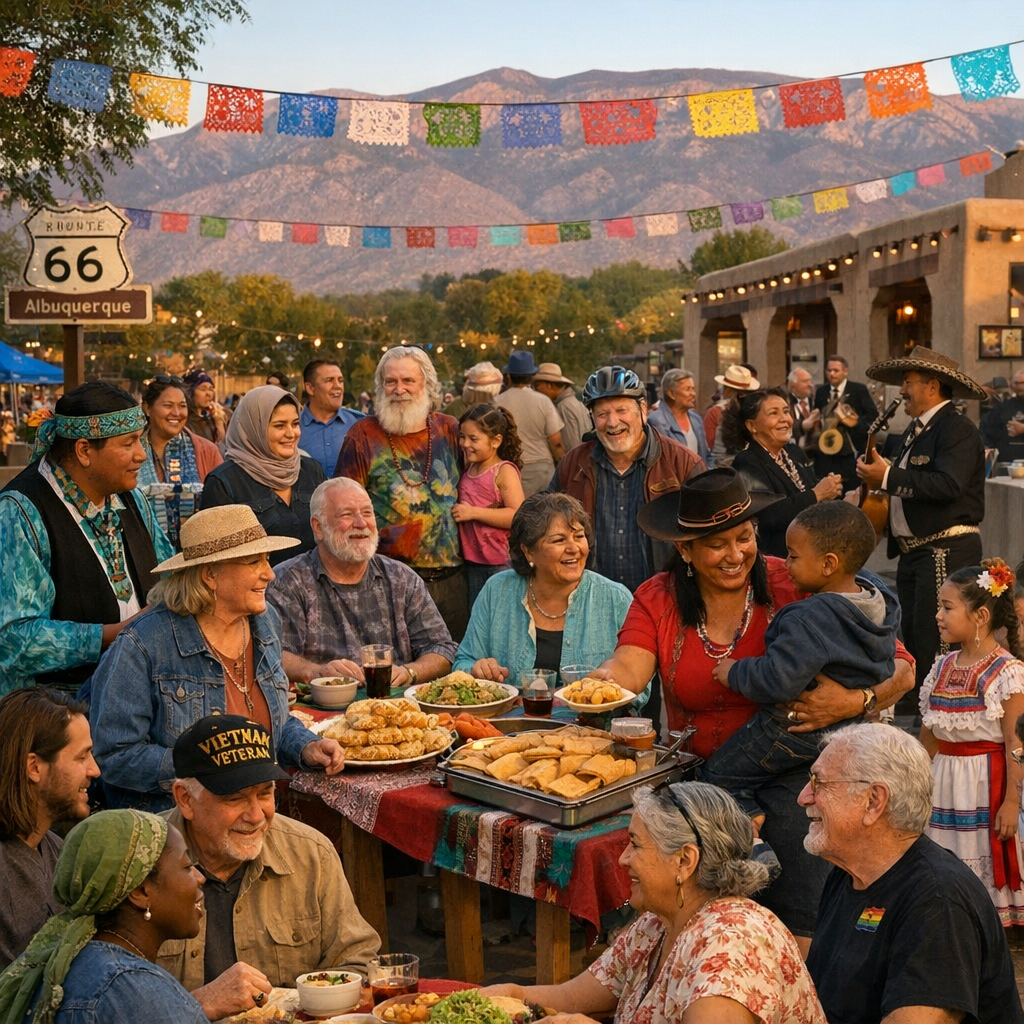
My name is Sebastian Gallegos, and I’ve been a Burqueño my whole life. Growing up in Albuquerque, I’ve seen us at our best—fiestas spilling into the streets, markets alive with color, children’s laughter at the park. But I’ve also watched our divisions grow: newcomers and longtime residents each just a little too separate, too unfamiliar, too unsure.
The Invisible Boundary Between “Us” and “Them”
In recent years, I’ve heard the word “transplants” used in ways that sound more guarded than welcoming. Outsiders who come for work, school, or climate often end up building their own bubbles—friend groups, social circles, routines—that don’t always intersect with local life. Local culture feels vibrant, but sometimes distant. Many locals feel that newcomers don’t quite understand the rhythms of the city—its history, its struggles, the unspoken things that shape daily life.
Why This Happens
There are many reasons for that distance. Geography plays a part: neighborhoods are spread out, public transit doesn’t always connect easily, and city infrastructure often favors certain areas over others. Economic divides make it worse: affordable housing is scarce, costs rise, and some people get priced out entirely. Our civic systems—like neighborhood associations and local government—often operate in ways that assume familiarity and resources, which not everyone has. And then there’s culture: we are a place of indigenous roots, Hispanic heritage, and new arrivals, layered together—rich, diverse, vibrant—but also complex.
Building More Than Bridges—Creating Shared Spaces
If Albuquerque is going to thrive, we need more than crosswords in the newspaper about “outsiders” or “locals.” We need ways to meet, listen, and participate together. I’ve seen it when a community garden blooms in a vacant lot—suddenly people who’ve lived blocks apart start speaking, laughing, sharing seeds. Or when a local arts collective stages murals and tells stories that allege history and anchor us to shared place. Or when public forums are structured so those without the loudest microphone still get heard.
What We Can Do Now
- Attend local events beyond your comfort zone—neighborhood potlucks, markets in parts of town you don’t often visit, or music nights with artists you haven’t heard before.
- Support businesses owned by people who are new here or by families that have been here generations; these spaces become gathering places.
- Volunteer with organizations bridging cultural divides—mentor youth, translate for elders, or help clean up historically under-resourced parts of town.
- When there’s a debate—about development, schools, policing—show up. Listen to people whose homes feel threatened. Express your thoughts even if it’s uncomfortable.
- Vote local. City council, school board—these choices shape our everyday lives. They decide who has the power to build, protect, include.
Hope From the Everyday
I believe Albuquerque’s strength comes from its stories—stories of migration, stories of survival, stories of love. Each of us, whether here for generations or months, carries a piece of the city’s future. We can share that future, not just in conversation but in action.
Let’s not let the natural divisions of history, economy, or geography define us. Let’s build a Burque where people feel both deeply rooted and truly welcomed. That’s how we become whole.