

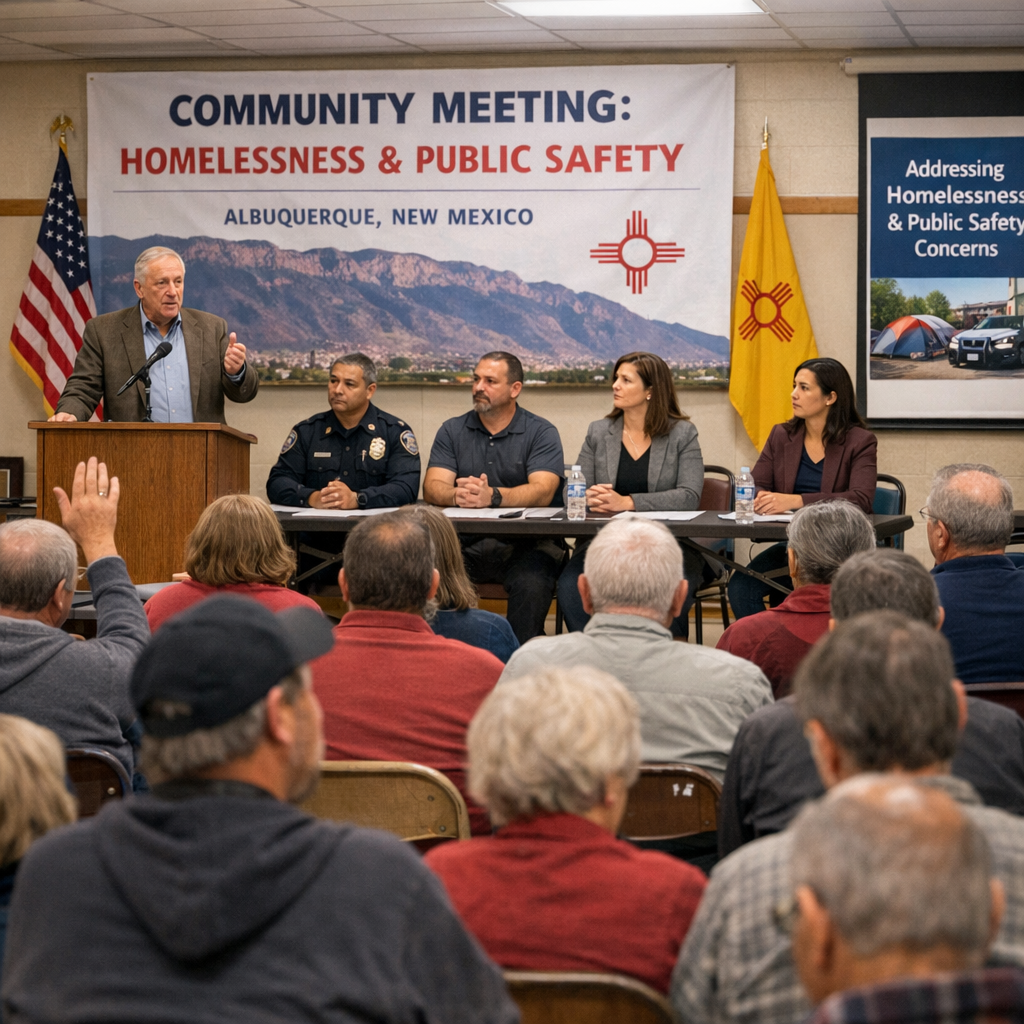
Albuquerque is grappling with the complex issue of homelessness, striving to support vulnerable populations while addressing public safety concerns. Recent developments highlight the city’s efforts and the community’s response to this ongoing challenge.
Community Concerns Near the Gateway Center
Residents in southeast Albuquerque have expressed increasing concerns about crime and quality-of-life issues surrounding the Gateway Center, a facility providing shelter and services for individuals facing homelessness, mental health challenges, and addiction. Neighbors report a rise in encampments, litter, drug use, and burglaries in the area. In response, City Councilor Nichole Rogers is working to update the existing ‘Good Neighbor Agreement’ and develop a new ‘Community Benefits Agreement’ to incorporate more community input. This initiative aims to balance the center’s essential services with the neighborhood’s safety and well-being.
Legislative Measures on Public Spaces
In May 2026, the Albuquerque City Council passed the Enhanced Service and Safety Zone Ordinance, making it illegal to sit, sleep, or lie on public sidewalks in designated areas after a written warning. Violators could face fines or jail time. Supporters believe this measure will clean up the streets and boost foot traffic in commercial areas, while opponents argue it unfairly targets individuals experiencing homelessness. The ordinance reflects the city’s attempt to address public safety and urban cleanliness amid rising homelessness.
Community and Organizational Responses
Various organizations and community members are actively involved in addressing these issues. The Greater Albuquerque Chamber of Commerce has initiated Bold Issue Groups focusing on downtown transformation, public safety, and education reform to tackle challenges like high crime rates and the need for revitalization. Additionally, the Albuquerque Police Department is utilizing digital surveys to gather community feedback, aiming to build trust and improve service satisfaction.
Balancing the provision of essential services for the homeless with the concerns of the broader community remains a complex task. Ongoing dialogue, community engagement, and collaborative policymaking are crucial in developing solutions that address the needs of all Albuquerque residents.